|
Welcome to the Biotechnology Regulatory Fellowship Program
Biotechnology Regulatory Fellowships are six-month, full-time (37.5 hours per week), hands-on professional development fellowships structured to engage Fellows in developing the evidence basis needed to meet future regulatory challenges presented by novel products of biotechnology. The Fellowships, which take place in Washington, D.C., are conducted and administered under the auspices of the Committee on Science, Technology, and Law (CSTL) of the National Academies of Sciences, Engineering, and Medicine.
Fellows will identify new regulatory frameworks for the anticipated cutting-edge products expected to emerge over the next several decades and thereby expand agency options for thoughtful, effective regulation.
Fellows will participate in a series of seminars led by subject-matter experts, conduct horizon-scanning activities to identify potential products of biotechnology that lack existing or conflicting regulatory risk assessment pathways, and identify foci for capstone projects that will be undertaken by pairs of fellows.
For capstone projects, Fellows will:
- Have opportunities to work with mentors currently or formerly employed at the U.S. Department of Agriculture, the U.S. Environmental Protection Agency, or the U.S. Food and Drug Administration;
- Work with a paired member of their cohort with varied background/expertise (ideally, individuals with scientific, engineering, and/or medical experience will be paired with individuals with legal, policy, and/or regulatory experience);
- Brainstorm early solutions to project ideas collectively across the cohort to encourage creative thinking and build relationships amongst the multidisciplinary cohort;
- Establish where/how to communicate final project results to provide greatest value to agencies; and
- Present capstone projects to the Biotechnology Regulatory Fellowship Advisory Committee, mentors, and agency staff at the end of the fellowship session.
As part of the Fellowship, Fellows will have the opportunity to participate in topic-specific activities such as attending informational events inside and outside the National Academies (e.g. workshops and convenings, Congressional hearings, seminars at think tanks, etc.) and relevant industry conferences.
Award Details
The following benefits are available to Fellows:
- Each Fellow will receive a stipend in the amount of $70,000 in the form of a grant. The stipend is intended to offset living expenses and will be paid in monthly installments during the term of the Fellowship.
NOTE: Fellows are not eligible to participate in any National Academies' employee benefit programs.
Criteria
Applicants must meet specific criteria to be eligible for a Biotechnology Regulatory Fellowship. The Fellowship is open to a broad range of early-career professionals with scientific, medical, legal, policy, and other professional backgrounds who have a demonstrable interest or passion in the regulation of cutting-edge products. While familiarity with regulation is helpful, it is not necessary to be a participant in the program. The program provides an opportunity for individuals who may have worked in adjacent fields but find themselves drawn to work related to novel products of biotechnology.
Select each category below to learn more about these criteria.
Applicants must:
- Be a U.S. citizen;
- Have an advanced degree in a relevant field;* and
- Have between three and five years of relevant professional experience.**
** For the purposes of the Fellowship, professional experience acquired during matriculation would qualify as professional experience.
Fellows will be selected through a national competition on the basis of:
- Professional achievements
- Quality of submitted essay
- Expertise in areas relevant to the Fellowship
- Recommendations
Terms and Conditions
The Fellowship is a six-month program that begins on February 1, 2027 and ends on July 31, 2027. It is a full-time (37.5 hours per week), hands-on professional development fellowship structured to engage Fellows in developing the evidence base needed to meet future regulatory challenges presented by novel products of biotechnology.
The Fellowship is conducted and administered under the auspices of the Committee on Science, Technology, and Law of National Academy of Sciences (NAS), a private tax-exempt organization, which includes under its charter the National Academy of Medicine and the National Academy of Engineering (collectively the "the National Academies").
Fellows are expected to attend the entire six-month program (including orientation) in person at the National Academies' facilities in Washington, D.C.
Fellows are responsible for arranging their own transportation to and from Washington, D.C. and for making their own housing arrangements.
Fellows will be expected to acknowledge and agree to:
- Conform to all applicable policies and procedures of the NAS, including without limitation the Policy on Preventing Discrimination, Harassment, and Bullying: Policy for Participants in National Academies Activities
- Grant the National Academies a non-exclusive, no-cost worldwide license in all media to use and have used for NAS's tax-exempt purposes any images and/or videos of taken by an NAS employee or agent during the term of Fellowship and any written materials drafted in connection with the Fellowship's capstone project;
- Coordinate a request for unanticipated absences during the term of the Fellowship with the program director;
- Complete and submit an online onboarding questionnaire, mid-term questionnaire, and exit questionnaire about their experience; and
- Complete the full term of the Fellowship. (In the event a Fellow does not complete the full term for any reason, Fellows agree to return to the NAS the pro rata portion of the stipend grant commensurate with the length of time remaining in the Fellowship session).
During the term of the Fellowship, Fellows may not engage with the National Academies in any role where the Fellow receives financial support for services provided to the Academies as this may represent a conflict of interest.
The NAS reserves the right to revoke a Fellowship in cases where false or incomplete information was provided by the participant during the application and selection processes. Additionally, a Fellowship may be revoked at the sole discretion of the NAS for violations of ethics rules, illegal activity, unprofessional conduct, discrimination, harassment, bullying, or other behavior that is inconsistent with achievement of the program goals or National Academies' policies.
Application Instructions
A complete application package must include the materials described below, and it is the responsibility of the applicant to ensure that all uploaded documents are accurate, legible, complete, not password-protected or secured, and that documents comply with the formatting specifications listed for each document. Once an application is submitted and the application deadline has passed, applicants will not be able to make changes to their application.
Please be aware that all application materials submitted will be shared with the selection panel.
All application materials become the property of the National Academies of Sciences, Engineering, and Medicine and will not be returned. Applicants should retain copies of all submitted application materials for their personal records.
The Curriculum Vitae should be no more than ten double spaced pages in 12-point font with 1 inch margins. Vitae should include the following:
- Name and current institutional affiliation
- Education (degrees, institutions, dates)
- Honors and awards (list up to 10 of the most significant)
- National or international professional experience
- Peer-reviewed publications (no more than 5 of the 10 pages; you may indicate the total number of publications from which the list is derived)
- Other publications and patents
NOTE: If the applicant provides a document that exceeds ten pages, only the first ten pages will be reviewed. Individual citations including publications and references may be single spaced.
Applications must be accompanied by two letters of recommendation. Applicants will be required to list contact information and initiate the sending of letter requests to letter writers before their applications can be submitted.
Letter writers should:
- Be knowledgeable about the applicant's capabilities and professional experience.
Letters of recommendation must:
- Address the qualifications of the applicant relative to the Fellowship Selection Criteria;
- Be limited to no more than two pages; and
- Be successfully uploaded by the application deadline
Instructions for letter writers on expected content will be provided in the request to letter writers initiated by the applicant. Letters must be uploaded into online applications by the application deadline. Letters sent via postal mail or email will not be accepted nor will letter writers be notified on behalf of applicants. When a letter is successfully uploaded, the letter writer and the applicant will receive a confirmation email from biotechfellows@nas.edu. If an applicant or letter writer has not received a confirmation, they should reach out to biotechfellows@nas.edu. to confirm receipt.
How to Apply
Select the sections below to learn more about how to apply and submit an application to the Biotechnology Regulatory Fellowships.
- Select the Register button.
- Complete the fields for your Login Profile and Contact Information.
- Enter the spam control value.
- Select the Submit button.
- Select the Log in button.
- Enter the email address and password you registered with.
- Select the Log in button.
- Select the Create button.
- On the Survey Page, select the response that best describes how you discovered the Biotechnology Regulatory Fellowships. Please enter additional details if a text box is populated for your selected response. Please select "Other" and enter a response if listed options don't apply.
- Respond to the question on the Eligibility Page. You will not be able to proceed with your application unless a valid response is entered.
- Select the Save button.
- Complete all the required fields in the Applicant Profile section.
- Enter at least three and up to five keywords or keyword phrases relating to your research field.
- Enter essay text of no more than 1500 words.
- Carefully read and adhere to the content and formatting instructions for each, including document length.
- Save each file as a PDF prior to uploading.
- On the Upload Page, select the Choose File button.
- Select and open the file from your device.
- Select the Save as Draft button to complete the upload and save each document.
- Enter contact information for two letter writers who will submit letters of recommendation on your behalf.
- Select Save as DRAFT button after entering each letter writer's information.
- Select Initiate Email Request button to send the letter writer an email requesting them to submit a letter on your behalf ("instructions" for letter content and formatting will be included in the email request).
- Select Save as DRAFT button to save information you have entered or to upload documents.
- Select Submit as FINAL button once your application is absolutely complete and you are satisfied with its content (a green checkmark will populate on the tab once the page has been fully completed).
You will receive a confirmation email after you select the Submit as Final button. To download the application form (without document uploads) you may select the Download button on the "My Dashboard page". Alternatively, you may select the icon next to Download Application in the Application Summary Box to save the application form as well as each document upload.
In order to be considered complete and eligible for review, all applications must include two letters of recommendation. You can re-send requests to letter writers by selecting the Initiate Email Request button on the Letters of Recommendation. You will receive a copy of the confirmation message sent to the letter writer once a letter has been successfully uploaded.
- Log in.
- Select the Edit button on the "My Dashboard/My Fellowships page."
- Make any necessary changes.
- Select the Save as FINAL button. Do not select Save as DRAFT; otherwise, your application will not register as complete and may not be considered for review.
If you no longer wish your application to be considered, you may withdraw it from consideration.
- Log in.
- Select the Withdraw button on "My Dashboard/My Fellowships" page.
- Enter reason for withdrawal.
- Select OK.
Frequently Asked Questions (FAQs)
Q: If I have a Permanent Resident (i.e., “Green”) Card, am I eligible for a fellowship?
A: No. To be eligible for a fellowship, applicants must be U.S. citizens.
Q: Are dual citizens eligible for a fellowship?
A: So long as one nationality is U.S., dual citizens are eligible to apply for a fellowship.
Q: What is considered an advanced degree?
A: An advanced degree is a degree beyond a four-year degree. A master’s degree, for example, is a qualifying degree.
Q: If I were to obtain a qualifying advanced degree prior to the start of the fellowship term (but after the application deadline), may I apply for a fellowship?
A: No. A qualifying advanced degree must be obtained prior to the application deadline.
Q: If I have more than 5 years of relevant professional experience, may I apply for a fellowship?
A: The fellowship is designed for early career professionals, and while the expectation is that applicants will have 3-5 years of professional experience, experience in a range immediately beyond 5 years would not necessarily be disqualifying.
Q: Would previous fellowships count as professional experience?
A: Yes.
Q: Can coursework be counted as professional experience?
A: No. However, professional experience acquired during matriculation would count as professional experience.
Q: Would individuals working in industry benefit from the fellowship program?
A: Yes, individuals from industry would benefit from the fellowship and are encouraged to apply.
Q: Are fellows eligible for National Academies’ health insurance or other employee benefits?
A: No. Fellows are not eligible to participate in any National Academies' employee benefit programs.
2026 Fellows

Alekhya Govindaraju is a microbiologist whose research sits at the intersection of fundamental biology and biotechnology, driven by two questions: what can we learn about biological phenomena, and how can we harness these processes to address pressing challenges like climate change?
Govindaraju recently completed her role as a postdoctoral researcher at the University of California, Berkeley (UC, Berkeley), where she characterized novel lanthanide-binding proteins in methylotrophic bacteria with applications in rare earth element recovery and recycling. She received her Ph.D. in microbiology from UC, Berkeley, where she investigated the metabolic processes that enable bacteria to transform complex lignin-derived compounds into valuable products. With a combined 10 years of research experience, she has integrated genomic, genetic, transcriptomic, and metabolomic approaches to understand bacterial metabolism with applications in sustainable biotechnology.
Beyond the bench, Govindaraju has actively sought to understand how scientific discoveries translate into real-world impact. She completed a Nucleate Venture Capital Fellowship in climate biotechnology, analyzing the trajectories of university startups to identify critical inflection points for success or failure. As an intern at RareTerra, a rare earth element biomining startup, she conducted market analyses and regulatory assessments while developing business strategies. She also participated in the Bay Area Regional NSF I-Corps program, conducting stakeholder interviews with mining industry experts to explore business opportunities for novel technologies in microbial rare earth element recovery platforms. These experiences revealed that scientific breakthroughs alone are insufficient to bring innovations to market-supportive regulatory frameworks, market understanding, and cross-sector collaboration are equally essential.
Through her fellowship at the National Academies, Govindaraju aims to contribute to science-informed policies that accelerate climate biotechnology solutions and bridge the gap between breakthrough discoveries and their practical implementation.
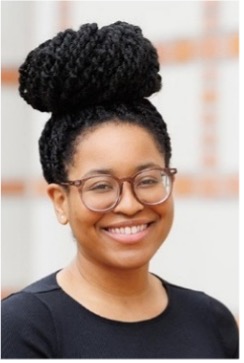
Alicia Johnson is a trained scientist and educator who uses her technical background to study the ethical, legal, and social implications (ELSI) of emerging biotechnologies enabled by synthetic biology. She is currently a postdoctoral fellow with the Science and Technology Policy Program at Rice University’s Baker Institute for Public Policy in Houston, Texas. Johnson’s current research focuses on the regulatory and social implications of engineered bacteria in environmental monitoring and bioremediation. In addition to her ELSI work, she is interested in community engagement surrounding synthetic biology and building capacity for researchers to engage in communities, policy, and become more effective communicators.
Before joining Rice as a Rita Allen Civic Science Fellow, Johnson earned a Ph.D. in biochemistry from the University of Nebraska-Lincoln where she focused on metabolism in drug-resistant epilepsy using a paper-based blood collection device and mass spectrometry techniques. This use and application of a device in the clinic inspired Johnson to pursue other paths to advance equity in healthcare and biotechnology.
Broadly, Johnson is interested in bridging the gaps between society, science, and policy. She brings to the Biotechnology Regulatory Fellowship previous experience in technology transfer, mentoring undergraduate students, teaching and curriculum development for science writing, science policy, and research methods courses. As someone who transitioned from lab research to ELSI research, Johnson hopes to leverage this unique perspective to better align science with societal needs. Her overall goal is to help build biotechnology futures that are grounded in trust, justice, and community needs. As fellow, Johnson is excited to learn about the day-to-day realities of synthesizing and communicating scientific evidence to develop actionable and thoughtful regulatory policies for biotechnology. In her free time, she enjoys discovering new music, reading, cooking, and boxing classes.
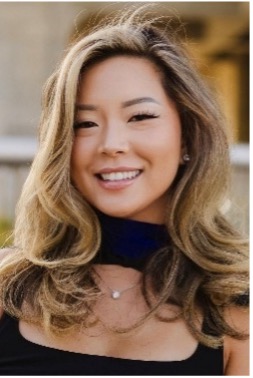
Ashley Kim is a scientist and emerging technology policy researcher whose work integrates biology, artificial intelligence (AI), and public policy. She recently completed a Ph.D. in biological sciences at the University of California, San Diego with support from a NIH T32 Fellowship. Her doctoral research investigated how environmental stressors shape honeybee circadian rhythms and communication through novel techniques using machine learning models and robotics.
Kim’s passion for science policy grew from her work in research translation, community engagement, and federal leadership. She has contributed to policy-relevant analyses on biotechnology governance, dual-use risk mitigation, and model oversight with companies such as OpenAI and Google DeepMind. In these roles, she worked on projects supporting the development and evaluation of large language models, contributing biology domain expertise that helped accelerate model iteration and deployment. In addition, she has held leadership roles across federal initiatives, including serving as a principal investigator with the National Park Service at Cabrillo National Monument. She designed and led a federally supported research program, managed project execution and reporting, and coordinated with National Park Service staff and external stakeholders to support conservation and science-informed management priorities. Her contributions have been awarded Special Congressional Recognition by the U.S. House of Representatives.
Kim is committed to supporting evidence-based regulatory frameworks that promote innovation while safeguarding public trust and biosecurity. She is particularly interested in strengthening governance approaches that ensure responsible development and deployment of future AI x Bio applications and is excited to join the National Academies as a Biotechnology Regulatory Fellow and to contribute to advancing emerging technology policy.
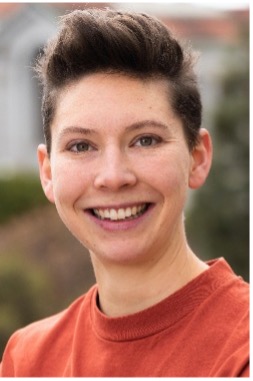
Hayley McCausland is a microbiologist and automation engineer who combines her areas of expertise to advance agricultural biotechnology in an industry setting. Most recently, McCausland was an automation scientist at Pivot Bio, an agricultural biotech company that produces a fertilizer replacement for large-scale corn farms, composed of gene-edited nitrogen-fixing microbes, to reduce reliance on synthetic nitrogen. At Pivot, she developed and automated high throughput assays to accelerate discovery and improve data quality. This work involved a combination of benchwork, programming of liquid handling robots, and management of cross-team projects.
Prior to working at Pivot, McCausland earned a Ph.D. in molecular and cell biology from the University of California, Berkeley (UC, Berkeley), where she focused on microbial genetics. Specifically, she studied magnetotactic bacteria, which are a diverse group of microbes that form crystals of magnetite inside organelles and respond to Earth’s magnetic fields. In her dissertation research, she developed new genetic screening methods for magnetotactic bacteria and discovered new roles for genes involved in the formation of bacterial organelles. Her work can be found in multiple publications.
During her time at Berkeley, McCausland was a writer and editor for a student run science magazine, the Berkeley Science Review, which aims to communicate scientific research at UC, Berkeley in a diverse range of fields to the public. She served as the Editor in Chief in 2020.
Prior to pursuing her Ph.D., McCausland earned her bachelor’s degree in neuroscience from Emory University, where she did research on the molecular causes of Fragile X Syndrome. After graduating, she spent a year as a National Institutes of Health Postbaccalaureate Research Fellow studying the behavioral impacts of adult neurogenesis at the National Institute of Mental Health.
McCausland is passionate about advancing biotechnology in the food and agriculture space and is excited to work on that goal from the regulatory perspective.
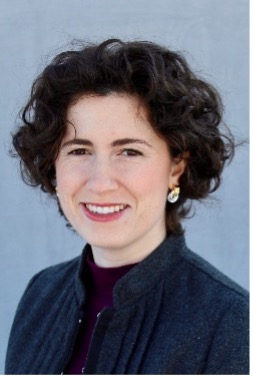
Ruby Miller is a scientist and policy-focused researcher committed to advancing early-stage biotechnologies for real-world impact. Miller integrates scientific innovation, regulatory strategy, and public benefit, and focuses on how emerging technologies transition from discovery to application.
Recently, Miller served as an innovation fellow at the University of Michigan’s Biointerfaces Institute (BI), advising researchers developing biotech and medtech innovations. As a fellow, she performed due diligence assessments of technologies, their markets, and relevant regulatory policies. She then led customer discovery initiatives to evaluate product–market fit and identify adoption barriers, while also supporting multiple Small Business Innovation Research (SBIR) submissions. Miller also coordinated communication strategies to promote the BI technology portfolio and advance external engagement, aligning university stakeholders and strengthening interdisciplinary collaborations.
Miller earned a Ph.D. in chemistry from the University of Michigan, where she developed next-generation genetic reporter systems to study G-protein coupled receptor (GPCR) signaling in opioid addiction pathways. Her doctoral research earned an National Institutes of Health Ruth L. Kirschstein F31 Predoctoral Fellowship, and she co-authored a peer-reviewed publication describing a high-throughput screening method for detecting GPCR activation.
Miller has applied systems-level thinking to regulatory projects, such as analyzing biosimilar and generic approval pathways while consulting for a task force on global access strategies. Her work is backed by formal training from the Ford School’s Science, Technology, and Public Policy certificate program. As President of the graduate student group Engaging Scientists in Policy and Advocacy (ESPA), Miller organized and led science policy programs. Additionally, she has honed her policy writing as both a Science Communication Fellow and an author for the MIT Science Policy Review.
Throughout her career, Miller has earned a reputation for interdisciplinary collaboration, strategic thinking, and leadership. Driven by a commitment to health equity, she is dedicated to strengthening regulatory science so that innovative, safe, and effective technologies reach those who need them most.
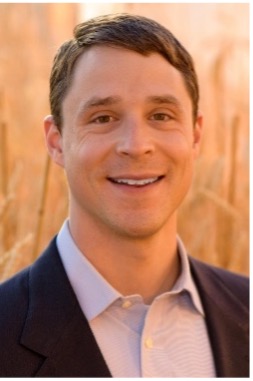
Nicholas “Cole” Mueth is a plant molecular biologist and educator. His career goal is to bring about the sustainable intensification of agriculture. He recently completed postdoctoral training in the Genome Sciences Department at the University of Washington in Seattle. He earned a Ph.D. from Washington State University, where he studied the two-way genetic interaction between wheat plants and the wheat stripe rust fungus, a devastating disease of cereal crops worldwide. Mueth’s research focus is gene regulation: how genes turn on and off during development and under environmental stress. He works at the interface of genetics, synthetic biology, and machine learning. Understanding how plant genes work together is the key to growing better-yielding, more resilient crops for improved global food security. His work has been featured in the journals Nature Communications, The Plant Cell, Genomics, and Nature Plants.
Mueth has collaborated with various agricultural biotechnology organizations including Bayer Crop Sciences, Corteva Agriscience, and the Donald Danforth Plant Science Center. He received policy training at the Purdue Center for Global Food Security. An internship with the U.S. Department of Agriculture’s Foreign Agriculture Service brought him to the U.S. Embassy in Berlin, where he reported on emerging biotech legislation. Mueth also teaches and mentors graduate students, undergraduates, and high school students. When not at the lab bench or in the classroom, he enjoys backpacking and meditation. He is a native of St. Louis, Missouri.
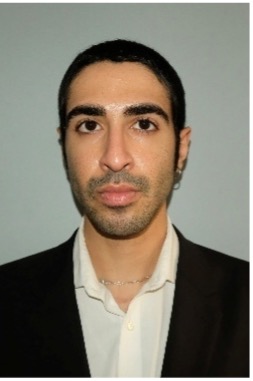
Sammy Mustafa is a clinical researcher focused on uncovering and addressing the underlying drivers of inequities in healthcare. As part of the 7-year B.A./M.D. Honors Program in Medical Education at Northwestern University, he studied biological sciences and conducted aging and longevity research, proposing a molecular approach that reduced the negative health impacts of aging.
After deferring medical school matriculation, Mustafa pursued a master’s degree in biomedical informatics at Harvard Medical School. He completed his capstone at Massachusetts General Hospital, where he developed an early detection method for Major Depressive Disorder using blood biomarkers. At the Massachusetts Institute of Technology, he examined how pain subjectivity introduces bias in pain documentation and influences pain management strategies and developed machine learning models to better understand pain at the individual level.
Mustafa is currently the co-founder of Bond Health, an AI-powered platform designed to improve the efficiency and diversity of clinical trial recruitment. He is developing HIPAA-compliant, proprietary large language model-based tools to help community clinics and Federally Qualified Health Centers without research infrastructure get involved in clinical research. Having raised over $250,000 for this venture, Mustafa is working to improve the diversity of clinical studies and support clinical research as a care option for all.
As an incoming student at the Northwestern University’s Feinberg School of Medicine, Mustafa plans to continue clinical research while expanding into the regulatory and policy frameworks that govern biomedical innovation and its translation into care. He aims to become a physician who pairs scientific innovation with civic engagement to advance health justice at the federal level.
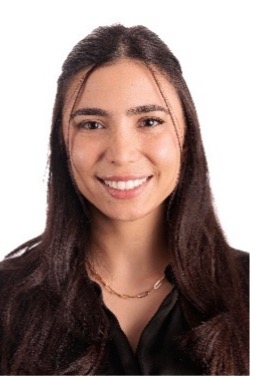
Shatha Salameh received a Ph.D. from The George Washington University’s Integrated Biomedical Sciences Program, with a concentration in pharmacology and physiology. She conducted her dissertation research at Children’s National Hospital in the Institute of Surgical Innovation, evaluating the cardiovascular effects of medications approved for adults but not yet formally studied in pediatric populations. The research addressed a critical clinical gap for children with congenital heart disease and generated preclinical evidence to inform safer therapeutic use and future clinical trials.
Salameh was awarded predoctoral fellowships by the National Institutes of Health and the American Heart Association for her research. She has contributed to multiple high-impact manuscripts, publications, and oral presentations at national and international conferences. Salameh earned a Master of Science in Pharmacology from Georgetown University, where she developed a strong foundation in pharmacokinetics, pharmacodynamics, and drug safety assessment. Her elective coursework on U.S. Food and Drug Administration regulatory processes supported her career interest in evaluating how scientific evidence is applied in regulatory settings. During her graduate training, Salameh examined strategies to enhance evidence-based prescribing and increase awareness of pharmaceutical industry marketing strategies through Georgetown University Medical Center’s PharmedOut project.
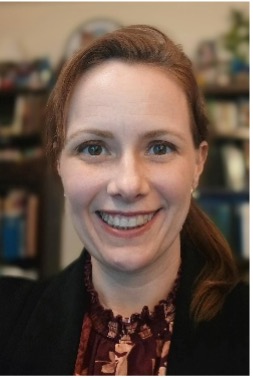
Kaitlyn “Katie” Schroeder-Spain previously served as a technical advisor to the U.S. Department of Energy Office of Science's (DOE SC) Deputy Director for Science Programs and as lead Program Manager (2020-25) for four prestigious, interdisciplinary career awards: the Enrico Fermi Presidential Award, the Presidential Early Career Award for Scientists and Engineers, the E.O. Lawrence Secretarial Award, and DOE SC's Distinguished Scientist Fellows Program. In her role at DOE, she facilitated over 35 merit review panels, established DOE SC’s Distinguished Scientist Fellows Guest Lecture Series, and managed DOE-hosted award ceremonies on behalf of the White House and Secretary of Energy. Schroeder-Spain also served as an AAAS S&T Policy Fellow (2018–20) in DOE SC, where she facilitated international agreements for science cooperation, supported DOE SC international science priorities, and contributed to policies advancing workforce and award management best practices. Prior to DOE, as a Texas Sea Grant Knauss Marine Policy Fellow (2015–16) at the National Science Foundation, Schroeder-Spain supported interagency efforts developing federal science program guidelines under the National Ocean Policy and led internal portfolio evaluations for the Division of Ocean Sciences.
Schroeder-Spain's academic career includes teaching and mentoring students at the University of Miami (2017–18) and Texas A&M University–Corpus Christi (2012–17). She has researched and published work on physiological adaptations in marine fishes and the effects of toxicants in coastal ecosystems. As a student, she served as a Ronald E. McNair Scholar (2008–10) and Graduate Research Fellow (2016-17).
Schroeder-Spain's contributions have been recognized through awards for teaching excellence, invitations to advise government officials on ecological topics, and public speaking engagements. She holds a Ph.D. in Coastal and Marine System Sciences from Texas A&M University–Corpus Christi and a B.S. in Biology (summa cum laude), with a minor in chemistry, from the University of North Texas.
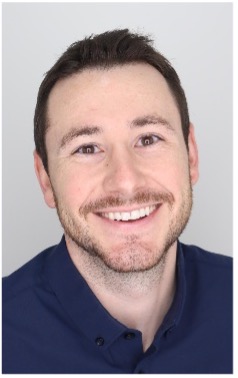
Nolan Speicher earned his B.S. in Biology from the University of Iowa before spending four years as a science communication specialist at Integrated DNA Technologies (IDT), a subsidiary of Danaher Corporation. At IDT, he researched trends in biotechnology and supported the launch of new innovations in custom nucleic acid synthesis through strategic content development and marketing analytics. Speicher’s industry experience led him to pursue graduate studies at North Carolina State University (NC State), where he spent the past six years as a collaborative researcher and instructor of science communication. After completing his M.S. in communication in 2021, Speicher spent two years in a National Science Foundation Research Traineeship (NSF-NRT) focused on the science, policy, and public engagement dimensions of emerging agricultural biotechnologies (AgBioFEWS). Working closely with NC State’s Genetic Engineering and Society Center, Speicher designed seminars and workshops on emerging biotechnologies and published research on federal biotechnology policy alongside a multidisciplinary team of Ph.D. students. Most recently, as a Research Scholar with NC State’s Hub for Food Systems Communication and Engagement, Speicher co-developed surveys, focus groups, and workshops to improve agri-food innovation through early engagement of public and stakeholder perspectives. These experiences across industry and academia shaped his dissertation, which reviews past and present National Academies’ reports to examine the challenges of science communication at the science-policy interface. Speicher will graduate from NC State with a Ph.D. in communication, rhetoric, and digital media in May of 2026.
KEY DATES
| June 1, 2026: | APPLICATION OPEN |
| August 31, 2026 (11:59 PM U.S. Eastern Time): |
Application deadline |
| September-October 2026: | Review of applications |
| November 2026: | Applicants notified of status |
| December 2026: | Awardees announced |
| February 1, 2027: | Fellowship begins |
| July 31, 2027: | Fellowship ends |


Follow Us!
CONTACT US
Biotechnology Regulatory Fellowship ProgramNational Academies of Sciences, Engineering, and Medicine
500 Fifth Street, NW
Washington, DC 20001
Phone: 202-334-1713
Email: biotechfellows@nas.edu